Home › Services
Wood privacy fences in Lexington: pine or cedar, built for wind and wet springs
A wood privacy fence is still the default backyard choice across Lexington and the surrounding counties. It screens a patio, gives a dog room to roam, and blends with brick ranches and newer subdivision homes alike. It is also the fence type where small construction choices make the biggest difference: the post grade, how the rails are fastened, the kind of screw, and when the first coat of stain goes on. Anyone shopping for a wood fence Lexington wide will find quotes that look similar on paper and differ a great deal in the details. This page explains those details plainly, and it is a good place to start if you are comparing options for fencing Lexington KY yards before you ask for a quote.
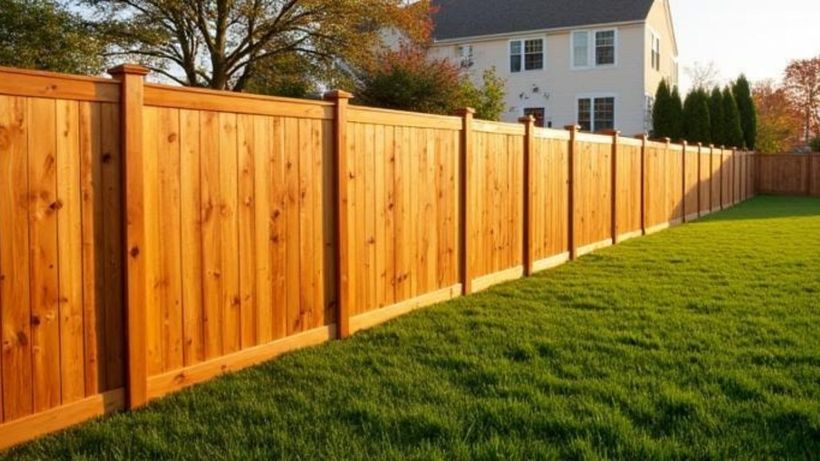
Treated pine or cedar: the honest tradeoffs
Pressure-treated southern yellow pine is the workhorse of residential fencing in central Kentucky. It is strong, widely available and costs less than cedar. The treatment protects it from rot and insects, and posts should carry a rating for ground contact rather than the lighter above-ground rating used for boards. Pine does move as it dries: boards shrink, some cup or twist, and a few will split. That is normal, and a good installer plans for it.
Western red cedar is naturally resistant to decay, lighter in weight, and tends to stay flatter and straighter than pine. It has a warm color when new and weathers to a silver gray if left unfinished. Cedar costs more, and it is softer, so it dents more easily. Many fences here use a hybrid: treated pine posts in the ground for strength and rot resistance, with cedar rails and pickets above for looks and stability.
Styles that suit Lexington yards
The simplest privacy fence is a stockade or solid board style, with pickets butted edge to edge on one side of the rails. Because pine shrinks as it dries, small gaps will open between boards over the first season. A shadowbox or board-on-board design overlaps pickets on alternating sides or in two layers, so the fence stays fully private as boards shrink, and it looks finished from both sides, which neighbors appreciate.
Other popular choices include horizontal board fences for a modern look, dog-ear or flat-top pickets with a cap and trim board along the top, and fences with a lattice or open topper that adds height while letting light through. Horizontal styles need posts spaced closer together or a center support, because long boards sag over a wide span. Check your HOA covenants before settling on a style, since many subdivisions specify which ones are allowed.
- Stockade or solid board: plain and economical, small gaps open as boards dry
- Shadowbox or board-on-board: full privacy even after shrinkage, attractive on both sides
- Horizontal slat: clean, modern lines, needs tighter post spacing
- Cap and trim: a top cap board and trim that sheds water and finishes the look
Posts, rails and the framework underneath
The framework is what keeps a privacy fence standing. Most residential privacy fences use four-by-four posts, with heavier posts at gates, corners and ends, and some builders use heavier posts throughout on tall or exposed runs. Post spacing is commonly around eight feet or a bit less. Tighter spacing adds cost but stiffens the fence and helps on windy lots.
Rails run between posts to carry the pickets. A six-foot fence usually gets three rails, which keeps pickets from bowing in the middle. Rails can be face-mounted on the post, notched in, or held with metal rail brackets; each works when done carefully. The bottom rail should sit a few inches above the soil so it is not wet all the time. In Bluegrass clay, posts go in below the frost line, which the contractor should confirm locally and list in the proposal.
Fasteners: the small detail that decides lifespan
Modern treated lumber is corrosive to plain steel, so every nail, screw and bracket should be hot-dipped galvanized or stainless steel and labeled for use with treated wood. Cheap bright nails can rust through within a few years, leaving black streaks down the boards and pickets that fall off. Stainless costs more but is the safest choice near cedar, which can react with some coatings and leave dark stains.
Ring-shank nails and exterior screws hold better than smooth nails as the wood swells in wet weather and shrinks in summer. Screws make it easier to replace a single board later without damaging its neighbors. Ask what fasteners are included in the quote, because this is one of the easiest places for a low bid to cut corners.
Wind load on a solid fence
A six-foot solid fence presents a large flat surface to the wind, and central Kentucky gets strong gusts ahead of spring and summer storms. The force pushes the whole panel and tries to lever each post out of the ground. That is why post depth, post size and good footings matter more on a privacy fence than on an open picket or board fence.
On open or exposed lots, a contractor may recommend closer post spacing, heavier posts, a board-on-board design with small air gaps, or a lattice topper that lets some wind pass through. Trees are the other hazard: large limbs over a fence line will come down at some point. Pruning dead wood before the fence goes up is cheaper than rebuilding a section later.
Height limits, neighbors and approvals
Six feet is the most common backyard privacy height, and many local zoning rules and HOA covenants treat it as a typical maximum for rear and side yards, while front yards and corner lots, where drivers need a clear sight line, usually get stricter limits. Rules differ between Lexington, the surrounding counties, and individual subdivisions, so check with the Urban County Government or your county planning office, and with your HOA, before choosing a height.
The finished side question also comes up. Many HOAs and some local rules expect the smooth face of the fence to point outward toward neighbors and the street. If you want the finished side facing in, or both sides to look good, a shadowbox style solves it. Talking with neighbors ahead of time about height and appearance tends to make the whole project easier.
When to stain or seal a new wood fence
New treated pine is often too wet to take stain well. A common rule of thumb is to wait until the wood has dried enough that a drop of water soaks in instead of beading on the surface, which can take several weeks to a few months depending on the season and how wet the lumber was when it arrived. Staining too early traps moisture and leads to peeling or blotchy color.
Cedar can be finished sooner, since it is usually drier when installed. A penetrating, semi-transparent oil-based or water-based stain with UV protection holds up better than a film-forming paint, which tends to peel on fences. Expect to recoat every few years; the south and west faces that get the most sun usually fade first. Apply stain in mild, dry weather, not in hot direct sun or when rain is expected within a day.
Rot, cupping and the problems that shorten a fence life
The most common failure on a wood privacy fence is rot at the base of the posts, followed by bottom boards and rails that stay wet from soil, grass or leaves. Posts with ground contact treatment, gravel at the bottom of each hole, concrete crowned to shed water, and a bottom rail or rot board a few inches above the grade all slow that process considerably.
Boards can also cup, twist or split as they cycle between wet springs and hot, dry late summers. Some movement is normal with pine. Fastening each board with at least two fasteners per rail, keeping them away from the board edge, and using a cap and trim across the top all help. Warped boards can be swapped individually, which is one reason screws are handy.
Maintenance that keeps a wood fence looking right
A wood fence does not need much, but it does need something. Once a year, walk the line: tighten loose screws, replace cracked boards, check gate hardware, and push on each post to catch early lean. Trim grass and weeds away from the bottom, keep mulch and soil off the boards, and clear piles of leaves in the fall.
Wash off mildew with a gentle cleaner and a garden hose rather than a high-pressure washer on a strong setting, which can gouge soft wood and raise fibers. Restain when water no longer beads on the surface. A fence cared for this way stays straight and private far longer than one that is ignored until a board falls off.
Wood privacy fences in Lexington — common questions
Is cedar worth the extra cost over treated pine?
It depends on priorities. Cedar stays straighter, resists decay naturally and weathers to an attractive gray, which suits homeowners who want a natural look and less warping. Treated pine is stronger, costs less, and performs well when stained and maintained. Many Lexington fences combine treated pine posts in the ground with cedar pickets above, which balances strength, cost and appearance.
How tall can a backyard privacy fence be around Lexington?
Six feet is typical for backyards, but the allowed height depends on where you live, where on the lot the fence goes, and whether you are in a subdivision with covenants. Front yards and corner lots usually have lower limits. Check with the Urban County Government or your county planning office, and your HOA, before settling on a height, and ask the contractor to confirm.
Why are there gaps between my new privacy fence boards?
Treated pine is usually delivered wet from the treatment process and shrinks as it dries, so boards installed tight together will open small gaps over the first months. That is normal wood behavior. If complete privacy matters, a board-on-board or shadowbox design overlaps the boards so gaps stay covered even after shrinkage. Tell the contractor up front if gaps would bother you.
How soon can I stain a new wood fence?
For treated pine, wait until the wood is dry enough to absorb water rather than bead it; that commonly takes several weeks to a few months depending on weather. Sprinkle a little water on a board to test. Cedar is usually drier and can often be finished sooner. Use a penetrating exterior stain with UV protection and apply it in mild, dry weather.
Which side of the fence should face my neighbor?
Many HOAs and some local rules expect the finished side to face out toward neighbors and the street, with the posts and rails on your side. Check your covenants before the fence is built. If you would rather have the smooth side facing your yard, or both sides to look finished, a shadowbox or board-on-board design shows a good face in both directions.
How long does a wood privacy fence last in central Kentucky?
Lifespan varies with materials, how the posts were set, drainage, sun exposure and how well the fence is maintained. Posts rated for ground contact, good drainage at each hole, quality fasteners and regular staining all extend it considerably. Fences that sit in wet soil, get no finish and have boards touching the ground wear out much sooner. Ask the contractor what they expect for your specific yard.
Will a solid wood fence hold up to strong wind?
A properly built one generally will. The key factors are post size and depth, footing quality, post spacing and the soundness of the wood at the base. On open or exposed lots, closer post spacing, heavier posts or a design with small air gaps can reduce stress. Weak or rotting posts are what usually fail in storms, so an older fence deserves a check each spring.
Talk through your site
Start with the address, what you want done, and a few photographs of the area, including anywhere water sits after a heavy rain.
Related work
Fence Installation
New residential fences laid out and set for Bluegrass clay, limestone and rolling lots.
Fence Repair
Heaved or leaning posts, dragging gates, storm and tree damage, and when to start over.
Vinyl Fences
Vinyl privacy, picket and post-and-rail fences that stay clean with little upkeep.
Board & Farm Fences
Plank board, post-and-rail and wire fencing for acreage, pastures and country lots.
Aluminum Fences
Ornamental aluminum for front yards, pools and sloped lots.
Across the metro
Nicholasville
Fast-growing Jessamine County subdivisions south of Lexington.
Georgetown
Scott County neighborhoods and larger lots north of Lexington.
Versailles
Woodford County homes, small farms and board-fence country to the west.
Winchester
Clark County town lots and rural properties east of Lexington.