Home › Services
Aluminum fence: ornamental, pool and sloped-yard fencing near Lexington
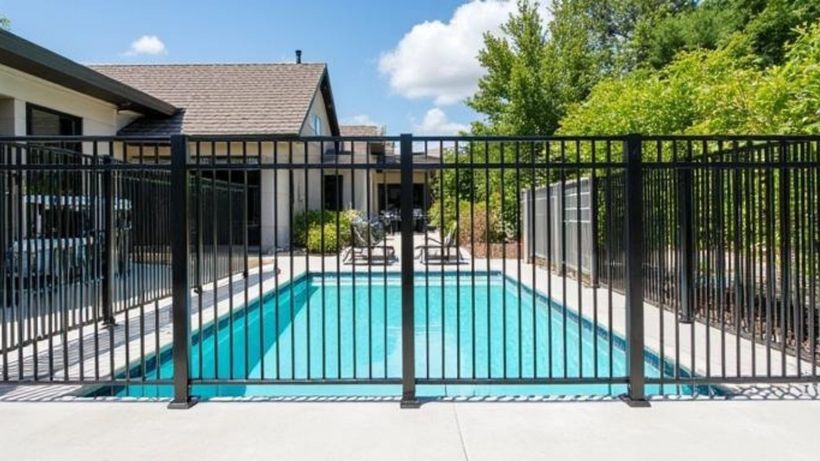
Ornamental aluminum is the fence people choose when they want a clear boundary without walling off the view. It shows up along front walks in older Lexington neighborhoods, around backyard pools in Beaumont and Hamburg, and on sloping lots in Nicholasville and Georgetown where a solid fence would look awkward stepping down the hill. It looks like wrought iron from a few steps away, but it does not rust, it weighs far less, and it asks for little more than an occasional rinse. The details still matter: the grade of the pickets and rails, the quality of the powder coat, whether the panels can rack to follow a slope, how gates close around a pool, and how posts get set in the clay and limestone under many Bluegrass yards. Each topic gets its own section below, which should make any bid you receive easier to judge.
Aluminum or steel: choosing the metal behind the look
Both aluminum and steel ornamental fences use square pickets running through horizontal rails, and from the street they can look nearly identical. The difference is underneath the paint. Steel is stronger and more rigid, which is why it is chosen where security or impact resistance really matters, but it rusts wherever the coating is chipped or scratched. In a damp climate with cold winters, a nick left untouched can bloom into a rust streak within a season or two.
Aluminum does not rust. It forms a thin oxide layer that protects the metal, so a scratch is a cosmetic problem rather than the start of corrosion. It is lighter, easier to handle and install, and simpler to cut and fit on site. For most homes, including front yards, pools and pet enclosures, aluminum offers the best balance of appearance, durability and upkeep. Steel is worth weighing mainly when you need more strength than a residential aluminum grade can give.
Residential, commercial and heavier grades explained
Manufacturers sell aluminum fencing in several grades, usually described as residential, light commercial and commercial or industrial. The grades differ in picket size, rail thickness and post wall thickness. Residential grade handles the everyday needs of most homes. Heavier grades feel noticeably stiffer, resist bending if a child climbs or a branch falls, and span wider openings more comfortably.
Heavier grades cost more and are often overkill for a decorative front-yard border. They make more sense for pool enclosures where kids will lean on the fence, for large dogs that jump against it, or for wide gates that see daily use. Ask the contractor which grade they are quoting and why, and whether the gate posts and hardware step up to a heavier size even if the panels do not.
Powder coat and why the finish matters
The color on an aluminum fence is almost always a baked-on powder coat. It is applied electrostatically and then cured in an oven, forming a hard layer that resists chipping, fading and chalking better than brushed or sprayed paint. Black is the color most homeowners pick, with bronze, white and other shades available from many lines. Some products add a pretreatment or primer layer under the powder, which improves adhesion over time.
A good finish should look even, with no bare spots at welds or around fastener holes. After installation, small scratches can be touched up with a matching paint pen from the manufacturer. Ask how the product line holds up to sun and weather and whether the contractor keeps touch-up paint on hand for field cuts.
Rackable panels for rolling Bluegrass lots
Many yards around Lexington are not flat. A stepped fence, where each panel stays level and drops at each post, leaves triangular gaps beneath panels on a slope, which can let pets escape and looks choppy. Rackable aluminum panels solve this by letting the rails pivot slightly at each picket so the whole panel follows the grade while the pickets stay plumb.
Each product has a limit to how far a panel can rack, often stated as a certain number of inches of drop over a panel width. Steeper grades may need a combination of racking and stepping, or custom-built panels. On a hillside yard, ask the contractor to walk the slope and explain whether standard panels will work or whether something custom is needed.
- Racked: panels follow the grade, pickets stay vertical, bottom gap stays even.
- Stepped: panels stay level, gaps open beneath on slopes, simpler on uneven ground.
- Combination: racking on gentle sections, stepping where the grade gets steep.
- Custom: fabricated to fit very steep or irregular slopes.
Pool enclosures, self-closing gates and local barrier rules
Aluminum is a popular choice around backyard pools because it is open enough to see through, does not rust around chlorinated or salt water, and meets the height and spacing needs of many pool barrier designs. Pool gates are the critical part. They typically need to close on their own and latch automatically, with the latch mounted high enough or on the pool side so a small child cannot reach it. Gates usually swing outward, away from the pool.
Pool barrier requirements are set locally and can cover fence height, picket spacing, the gap at the bottom, the distance from climbable objects and how gates close and latch. Check with the city or county building office and your HOA before the fence is ordered, since rules differ between jurisdictions and can change. A good contractor will ask what inspection is needed and build the gates to match.
Pet-friendly pickets and puppy panels
Standard aluminum picket spacing keeps most medium and large dogs inside, but small breeds and puppies can squeeze through. Many product lines offer puppy pickets, which add short extra pickets along the bottom of each panel to cut the gap in half. They blend in well from a distance and solve the problem without switching to a solid fence.
For dogs that dig, a bottom rail set close to the ground or a strip of wire buried along the line can help. For jumpers, taller panels or a heavier grade may make sense. Tell the contractor about your pets at the first visit, since it affects panel choice, height and gate latches.
Front-yard fencing, corner lots and height limits
Aluminum is often the go-to for front yards because it frames the house without hiding it. Many local governments and HOAs in the Lexington area limit fence height in front yards, and corner lots can face extra restrictions so drivers can see traffic at intersections. Some neighborhoods also require a particular style or color.
Before choosing a height or design for a front fence, check with the city or county and the HOA, and keep any approval in writing with the proposal. It is also wise to confirm the property line, since front-yard fences often sit close to sidewalks, utility easements and neighboring driveways.
Installing aluminum posts in clay and shallow rock
Aluminum posts are usually set in concrete footings dug below the frost line where the ground permits. Posts must be plumb and spaced accurately because panels are a fixed width, and a post that drifts even slightly can leave a panel that does not fit. Installers commonly set posts as they go, fitting each panel before the concrete sets up so spacing stays exact.
Limestone close to the surface is common around Lexington and throughout the Bluegrass. When a hole hits rock, the installer may core into it, anchor with a base-plate post mounted to rock or a footing, or shift the post where the layout allows. Surface-mount posts bolted to concrete are also used on patios and pool decks. Ask how rock will be handled, and ask to see the post-setting method in writing.
Keeping an aluminum fence looking new
Maintenance is light. Rinse the fence with a garden hose a couple of times a year, and wash with mild soap and a soft brush if dirt, pollen or lawn clippings build up. Touch up scratches with the matching paint so they do not catch the eye. Check gates once or twice a year: tighten hinge screws, make sure self-closing hinges still pull the gate shut, and confirm latches catch every time.
Keep vines and shrubs trimmed off the fence, and avoid piling mulch or soil against the posts. After a storm, look for panels bent by falling limbs; a single bent panel can usually be swapped out without disturbing the rest of the run.
- Rinse the fence with a hose in spring and fall.
- Wash stubborn spots with mild soap and a soft brush.
- Touch up scratches with manufacturer paint.
- Test pool gate closers and latches on a regular schedule.
What an aluminum fence proposal should include
Aluminum quotes can look simple, but details vary. Ask for these items in writing so bids can be compared fairly.
- Manufacturer, product line, grade, style, height and color.
- Post size and spacing, footing depth and how rock is handled.
- Whether panels are racked, stepped or custom on sloped sections.
- Gate sizes, hinges, self-closing hardware and latch type, especially for pools.
- Puppy pickets or other add-ons, and any removal of an old fence.
- Who arranges 811 utility marking, permits and HOA approval.
- Touch-up of field cuts and how workmanship issues are handled afterward.
Aluminum fence — common questions
Is aluminum fencing strong enough for my yard?
For most homes, yes. Residential-grade aluminum handles everyday use, pets and kids, and heavier grades are available when more stiffness is needed. It is not as strong as steel, so it can bend under a heavy impact like a falling limb, but it will not rust. For pool enclosures, big dogs or wide gates, ask the contractor about stepping up to a heavier grade for panels, posts or both.
Will an aluminum fence rust over time?
No. Aluminum forms its own thin protective oxide layer and does not rust the way steel or iron does. The powder coat protects the color and appearance, and if it gets scratched the metal underneath will not corrode and stain. A scratch is a cosmetic issue you can touch up with matching paint from the manufacturer. That is a big reason aluminum is favored around pools and damp areas.
Can an aluminum fence follow the slope of my yard?
Often, yes. Rackable panels let the rails tilt at each picket so the panel follows the ground while pickets stay upright. Each product has a limit to how much it can rack, so steep yards may need a mix of racking and stepping or custom-made panels. Ask the contractor to walk the slope and explain which approach works for your grade before ordering.
What do I need for a pool fence around Lexington?
Pool barrier rules are set locally and can cover height, picket spacing, bottom gap, gate direction and self-closing, self-latching hardware. Check with the city or county building office and your HOA before ordering, because requirements differ and can change. A good contractor will ask about inspection needs and install gates that close and latch on their own every time, with the latch out of reach of small children.
Will my small dog fit through aluminum pickets?
Small breeds and puppies can often squeeze between standard pickets. Many product lines offer puppy pickets, extra short pickets that fill the lower part of each panel and reduce the gap. They are hard to notice from a distance. For diggers, keep the bottom rail low or add buried wire, and for jumpers consider a taller fence. Tell the contractor about your pets at the first visit.
How tall can a front-yard aluminum fence be?
It depends on where you live. Many local governments and HOAs limit front-yard fence height, and corner lots may have tighter rules so drivers can see traffic. Some neighborhoods also dictate style or color. Confirm the limits with the local zoning office and any HOA before settling on a height, and keep any approval with your proposal so there are no surprises once the fence is installed.
What happens if rock is hit while setting posts?
Shallow limestone is common around the Bluegrass. The installer may core-drill into the rock, anchor a surface-mount post to rock or a concrete pad, or shift the post slightly if the layout allows. Because aluminum panels are a fixed width, post positions must stay accurate, so rock takes planning. The proposal should explain the method and how extra rock work affects the price.
Talk through your site
Start with the address, what you want done, and a few photographs of the area, including anywhere water sits after a heavy rain.
Related work
Fence Installation
New residential fences laid out and set for Bluegrass clay, limestone and rolling lots.
Fence Repair
Heaved or leaning posts, dragging gates, storm and tree damage, and when to start over.
Wood Privacy Fences
Privacy fences in treated pine or cedar, built to handle wind, sun and wet springs.
Vinyl Fences
Vinyl privacy, picket and post-and-rail fences that stay clean with little upkeep.
Board & Farm Fences
Plank board, post-and-rail and wire fencing for acreage, pastures and country lots.
Across the metro
Nicholasville
Fast-growing Jessamine County subdivisions south of Lexington.
Georgetown
Scott County neighborhoods and larger lots north of Lexington.
Versailles
Woodford County homes, small farms and board-fence country to the west.
Winchester
Clark County town lots and rural properties east of Lexington.