Home › Services
Vinyl fence: privacy, picket and horse-style rail around Lexington
Anyone pricing a vinyl fence lexington neighbors will admire for a long time should know that the plastic itself is only half the story. The rest is hidden: the steel or aluminum inside the bottom rail, the concrete around each post, the gap left at every rail end so the pieces can grow and shrink with the seasons, and whether the holes went deep enough in Fayette County clay or stopped short on a shelf of limestone. Vinyl asks for very little once it is built well. Built carelessly, it sags, rattles and cracks in ways that are harder to patch than a wood fence. What follows walks through the three main styles you see in the Bluegrass, what separates a stout product from a thin one, how Kentucky weather and ground treat it, and what a written proposal should put on paper before the first post hole is dug.
Three vinyl styles you will see across the Bluegrass
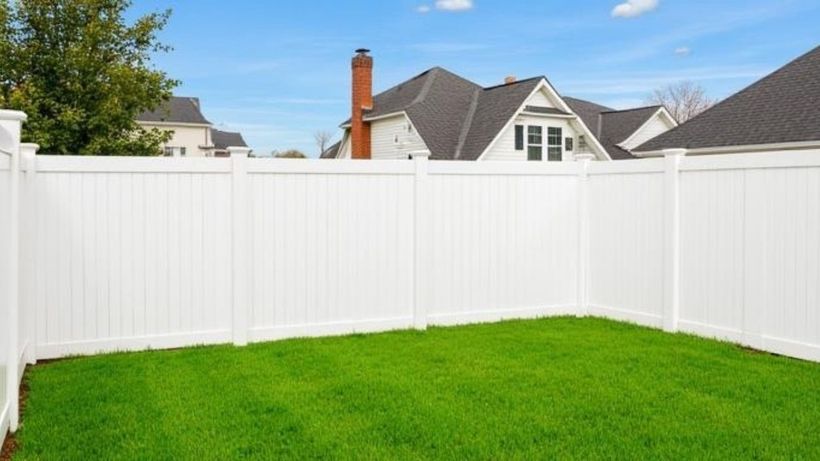
Most residential vinyl falls into three groups. Privacy fencing uses boards that interlock so there is no daylight between them, usually five or six feet tall, and it is the choice for backyards in Hamburg, Masterson Station and Beaumont where houses sit close and patios face each other. Picket fencing is the short, open style that dresses up a front walk or keeps a small dog near the porch. Post-and-rail is the open, horizontal look that echoes the plank fences lining the horse farms outside town, built with two, three or four rails running through routed posts.
Post-and-rail deserves a special mention here because it is so much a part of the local landscape. Plenty of homeowners on an acre or two in Jessamine, Scott or Woodford County want the farm look along the road without the scraping and repainting that a painted board fence demands. Vinyl rail gives that outline in white, and some lines offer darker colors as well. It marks a boundary and frames a lawn, but on its own it will not hold a dog or a small child, so many owners add a welded wire mesh on the inside face.
- Privacy: interlocking boards, full screening, the most wind load on each post.
- Semi-private or shadowbox variations: small gaps that let breeze pass and soften the look.
- Picket: three to four feet, open spacing, pointed, flat or rounded tops.
- Post-and-rail: two to four horizontal rails, often with mesh added on the inside for pets.
What makes one vinyl panel stout and another flimsy
From the curb, a budget panel and a heavy one can look almost the same. The difference shows up when you lean on it. The profiles are extruded, and the thickness of those extruded walls controls how rigid a post feels, how well a rail holds its shape between posts, and how much abuse a board can take from a string trimmer. Thin material flexes, dents and eventually splits at the routed holes where rails enter the posts.
Reinforcement matters just as much. Bottom rails on privacy panels span six or eight feet and carry the weight of every board above them, so good products slide a galvanized steel or aluminum channel inside that rail to keep it from drooping into a smile shape after a few hot summers. Gate frames need an internal metal frame, and the posts that hang gates should be stiffened too, either with a metal insert or by filling the post with concrete around a rebar or steel post. Ask plainly which parts are reinforced and with what, and get the answer written into the proposal.
Kentucky cold, summer heat and vinyl expansion
Lexington sees real swings. Summer afternoons regularly push into the nineties with thick humidity, and most winters bring stretches well below freezing with a few nights that dip into the single digits or lower. Vinyl reacts to both. It grows noticeably longer in heat and shorter in cold, which is why rails are cut so they sit into the post routes with a little room at each end. If an installer jams rails tight on a cool morning, a hot July day can bow them; if the rails are cut short on a scorching afternoon, a January night can pull them loose from the routes.
Cold also makes vinyl less forgiving of impact. A panel that shrugs off a basketball in August can crack when a snow shovel, a thrown chunk of ice or a mower-flung rock hits it in February. This is normal behavior for the material rather than a defect, and it is a good reason to keep a short buffer between the fence and the spot where the plow pile or the kids' sled run ends up. Better compounds include impact modifiers and UV inhibitors, which is another question worth asking about the product line.
Setting vinyl posts in Bluegrass clay and limestone
Central Kentucky sits on limestone, and in many yards around Lexington the rock is close enough to the surface to stop an ordinary auger. Above it, the soil is often a sticky clay that holds water in spring and shrinks and cracks in a dry late summer. Both conditions affect vinyl posts. Clay that stays wet and freezes can lift a shallow footing, and a post that heaves even a little will shove its rails out of the routes and leave panels racked out of square.
A careful installer digs below the frost line where the ground allows, flares the base of each hole so the footing is broader below than at the surface, and sets the post in concrete that is crowned at the surface so rain runs away from the post instead of pooling against it. When rock turns up, the options are a rock auger or core drill, moving the post a short distance if the layout permits, or pinning into the rock and using a shorter footing designed for it. Each choice has tradeoffs, and a proposal should say how rock will be handled and how that affects the cost.
- Hole depth stated for line, corner, end and gate posts, since they carry different loads.
- Concrete crowned above grade so water sheds away from the post.
- Gate posts stiffened with metal inserts or a concrete-filled core.
- A plan for rock that spells out the method and how extra drilling is charged.
Colors, textures and the HOA question
White is still the most common vinyl color, and it suits both the farmhouse rail look and a clean privacy fence. Tan, almond and clay-toned options blend with brick and stone, and several manufacturers now sell gray and darker shades, along with textured finishes meant to suggest wood grain. Darker colors absorb more heat, so ask whether the product line rates those colors for the same expansion behavior and fade resistance as white.
Many newer subdivisions around Lexington, Nicholasville and Georgetown have covenants that limit fence height, style, color and even which side of the fence faces the street. Check with your HOA and with the city or county before you choose a color, and keep the approval letter with your proposal. It is far easier to change a sample than a finished run of fence.
Mildew, green film and keeping vinyl clean
The complaint heard most often about vinyl in this area is the green or black film that creeps along the shady side of a fence, especially near downspouts, sprinkler heads and flower beds. Humid summers and damp springs feed mildew and algae on any surface that stays wet. It does not hurt the plastic, but it looks tired quickly.
Regular washing handles most of it. A soft brush with mild soap and water, rinsed with a garden hose, removes the film without scratching the surface. Stubborn patches usually yield to a product sold for cleaning vinyl siding. If you reach for a pressure washer, keep the pressure gentle, pick a broad spray pattern and stand well back; a pinpoint nozzle held close can scar the plastic and leave a rough surface that collects grime faster. Avoid abrasive pads and harsh solvents, which dull the gloss.
- Wet the section with a garden hose to loosen dirt and pollen.
- Scrub with a soft brush and a mild soap or a vinyl-safe cleaner.
- Rinse from the top down before the cleaner dries on the surface.
- Trim shrubs and redirect sprinklers so the fence can dry out between rains.
Replacing a cracked panel or a leaning post
One advantage of vinyl is that damage tends to be modular. A cracked picket, a split privacy board or a broken rail can often be replaced by unlocking the section, sliding out the damaged part and fitting a new one. The catch is matching. Profiles and colors differ from one manufacturer to another and can change over time, and older white vinyl may have yellowed slightly compared with a fresh piece. Keeping a note of the brand and style from the original proposal makes future repairs much simpler.
A leaning post is a different job. If the footing has heaved or the concrete has broken, the post usually has to come out and be reset, which means releasing the rails on both sides. When several posts along a run are moving, the cause is often shallow footings, poor drainage or clay that stays saturated, and it is worth asking whether resetting just the worst posts will simply move the problem down the line.
Vinyl, wood or aluminum for your yard
Vinyl usually costs more to install than a treated pine privacy fence, but skips the staining and sealing that wood needs every few years. It does not rot, splinter or attract termites. Aluminum makes more sense where you want to see through the fence, such as a front yard or around a pool, and it handles slopes more gracefully. Wood remains the easiest to modify and repair piece by piece with ordinary lumber.
On sloped lots, vinyl privacy panels are usually stepped, meaning each panel sits level and drops at the post, which leaves triangular gaps beneath on a steep grade. Some post-and-rail and picket lines can be racked a little to follow a gentle slope. If your yard rolls, ask to see how the panels will sit along the grade before you commit.
What a vinyl fence proposal should put in writing
A clear written proposal protects both sides and makes it possible to compare bids fairly. Two numbers that look far apart can turn out to describe different fences once you line up the details. Ask each contractor to describe the job in the same terms.
- Manufacturer, product line, style, height and color of every panel and gate.
- Post size and wall thickness, and which posts get metal inserts or concrete fill.
- Whether bottom rails and gate frames are reinforced, and with what.
- Hole depth, footing diameter and how rock or buried debris will be handled.
- Gate count, widths, hinges, latches and which way each gate swings.
- Removal and hauling of an old fence, and who calls 811 for utility marking.
- Who applies for any permit or HOA approval, and how long workmanship issues are covered.
Vinyl fence — common questions
Will a vinyl fence crack in a Kentucky winter?
Vinyl becomes stiffer and more brittle as temperatures drop, so a hard hit in deep cold can crack a board or rail that would have flexed in summer. Normal winter weather on its own should not crack a well-made, properly installed fence. The usual culprits are shovels, thrown ice, snow piled against panels and rocks kicked up by mowers or blowers. Choosing a thicker profile and keeping snow piles away from the fence reduces the risk considerably.
Can I get the white horse-rail look on a small lot?
Yes. Vinyl post-and-rail comes in two, three and four rail versions and works just as well along a quarter-acre front yard as on a country road frontage. Keep in mind that open rails will not contain most dogs. If you need containment, a welded wire mesh can be attached to the inside face, and it disappears surprisingly well from the street. Check any HOA rules about rail fencing in front yards first.
How do I get the green stuff off my vinyl fence?
That film is usually mildew or algae growing where the fence stays damp. Mix mild soap with water or use a cleaner made for vinyl siding, scrub with a soft brush, and rinse well with a hose. A pressure washer is fine on a low setting with a wide tip held back from the surface. Trimming plants and moving sprinkler heads so the fence dries faster keeps it from coming back as quickly.
Why are the rails on my vinyl fence sagging?
Sagging bottom rails usually mean the rail has no metal stiffener inside, or the stiffener is too light for the span. Heat softens vinyl slightly, and the weight of the boards above slowly bends an unreinforced rail downward. A leaning or heaved post can also pull a rail out of line. A contractor can check whether adding a stiffener or resetting a post solves it, or whether the panel should be replaced.
What happens if the installer hits limestone?
Rock close to the surface is common around Lexington. The installer may switch to a rock auger or core drill, shift the post a short distance where the layout permits, or anchor into the rock with a footing designed for that situation. Each method takes more time than digging in soil. A good proposal explains in advance which approach will be used and how extra rock work is priced, so there are no surprises mid-job.
Can one broken vinyl board be replaced without redoing the fence?
Often, yes. Most vinyl systems let the installer release a section, slide out the damaged board or rail and slip in a new one. The challenge is finding a matching profile and color, since products vary between manufacturers and older white vinyl may have aged slightly. Keep the brand and style name from your original paperwork. If an exact match is not available, a full panel swap is the cleaner fix.
Do vinyl fences handle sloped yards?
They can, but the approach depends on the style. Privacy panels are usually stepped, sitting level and dropping down at each post, which leaves triangular gaps under the panels on steeper ground. Some picket and rail lines can be racked slightly to follow a gentle grade. Gaps can be closed with landscaping or a trimmed kickboard. Ask the contractor to sketch how the fence will follow your yard before ordering.
Talk through your site
Start with the address, what you want done, and a few photographs of the area, including anywhere water sits after a heavy rain.
Related work
Fence Installation
New residential fences laid out and set for Bluegrass clay, limestone and rolling lots.
Fence Repair
Heaved or leaning posts, dragging gates, storm and tree damage, and when to start over.
Wood Privacy Fences
Privacy fences in treated pine or cedar, built to handle wind, sun and wet springs.
Board & Farm Fences
Plank board, post-and-rail and wire fencing for acreage, pastures and country lots.
Aluminum Fences
Ornamental aluminum for front yards, pools and sloped lots.
Across the metro
Nicholasville
Fast-growing Jessamine County subdivisions south of Lexington.
Georgetown
Scott County neighborhoods and larger lots north of Lexington.
Versailles
Woodford County homes, small farms and board-fence country to the west.
Winchester
Clark County town lots and rural properties east of Lexington.