Home › Services
Fence installation in Lexington: layout, rock, clay and gates done right
Most fences in the Bluegrass fail for reasons nobody sees on install day. A post that was set too shallow in wet clay, a hole that stopped short because the auger bounced off limestone, a gate hung on a post that was never meant to carry it. Those shortcuts show up two or three winters later as a leaning run and a latch that no longer lines up. If you are sorting through every fence company Lexington KY neighbors have mentioned, this page walks through the whole job in order, from the first string line to the final gate adjustment, so you know what a careful installer does and what to ask before you sign anything.
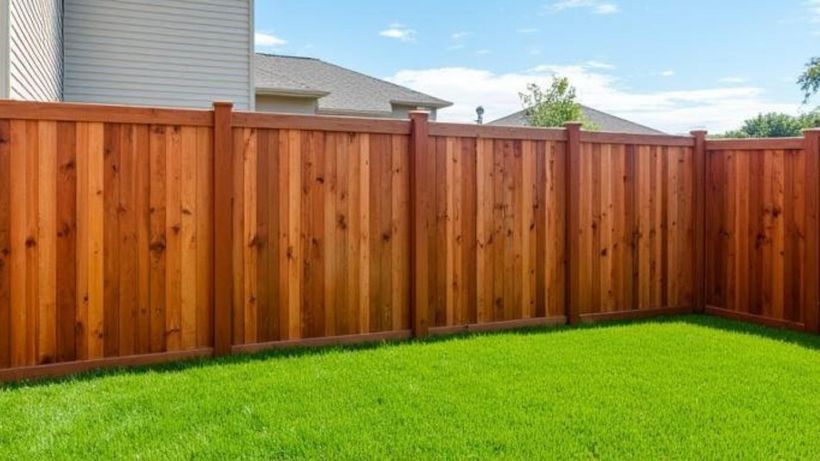
Deciding what the fence is actually for
Before talking about wood versus vinyl, pin down the job. A fence that keeps a young dog in the yard needs a tight bottom edge and no gaps a nose can widen. A fence that screens a neighbor's patio needs height in one stretch and maybe not in another. A front yard fence in an older Lexington neighborhood might be more about looks than security, and a pool enclosure has to meet rules about height and self-closing gates that someone should check before the design is final.
Walk the yard with a notepad. Mark where you carry groceries in, where the mower and the trash cans travel, where a trailer or a load of mulch might have to come through someday, and where water runs after a heavy spring rain. Those notes shape where the gates go, which corners can be cut, and which stretches need the most attention. A layout with fewer jogs and corners usually costs less, because every corner, end and gate calls for a heavier post set deeper.
Property lines, surveys and the parcel map problem
The online parcel viewer is handy for a rough sketch, but it is not a boundary. Its lines can drift several feet from where the real corners sit, and several feet is plenty to put a fence on the wrong side. In Fayette County and the surrounding counties, the dependable answer is a boundary survey or a set of found survey pins. If you bought the house recently, check your closing papers; a plat or survey drawing is often tucked in there.
Many homeowners choose to hold the fence back slightly from the line so the finished side, the footings and any future maintenance all stay on their own property. That also leaves room to reach the outside face for staining. Talk to the neighbor before work starts, not after. A short conversation about which side faces out and where the line runs heads off most disputes, and the contractor should not be the one guessing where your land ends.
Utility marking with 811 and the lines it does not cover
Anyone digging in Kentucky should contact the state's free 811 utility-locate service first. Once a request goes in, the utilities that own buried lines send locators to paint or flag where their gas, electric, cable, fiber and water lines run. Nobody should put an auger in the ground until those marks are down and the waiting period has passed. Ask whether the contractor places the request or expects you to, and get that answer in writing.
The 811 locators only mark lines the utilities own. Private lines are your responsibility: an invisible dog fence wire, irrigation lines, a buried feed to a detached garage or a backyard lamp post, a propane line to a grill, or a drain pipe from a gutter downspout. Walk the fence route with the installer and point out anything you know about. A private locating service can find the rest if the yard has a long history of projects.
Permits, zoning and HOA rules around Lexington
Fence rules differ from one jurisdiction to the next. Inside Lexington, zoning handled by the Urban County Government covers height, placement and corner visibility, and a new fence may need a permit depending on where it goes and how tall it is. Outside Fayette County, the city or county planning office in places like Nicholasville, Georgetown, Versailles, Winchester or Paris is the one to call. Rules tend to be strictest in front yards and on corner lots, where a solid fence can block a driver's view.
Homeowners associations add another layer. Many newer subdivisions around Hamburg, Masterson Station and Beaumont, and plenty of developments in Jessamine and Scott counties, have covenants that limit height, material, color and which side of the fence faces out. Some require an architectural review form with a drawing before work starts. Get the HOA approval in hand before materials are ordered, and ask the contractor whether they prepare the permit paperwork or leave it to you.
Frost depth, Bluegrass clay and setting posts that stay put
Central Kentucky winters swing above and below freezing over and over. Each freeze swells wet soil, and water-heavy clay grabs a post and lifts it a little. Over several winters that adds up to a crooked line. The fix is depth: the bottom of the post footing should sit below the level where frost reaches. For a typical residential fence around here that often lands somewhere around two to three feet, with gate and corner posts going deeper, but confirm the requirement locally and have the depth written into the proposal.
Bluegrass soil is often a dense, reddish-brown clay that holds water after rain and cracks when it dries. That matters for how posts are set. Many installers drop a layer of crushed stone into each hole first so water drains away from the post end, then set the post in concrete crowned slightly above grade so rain sheds off rather than pooling against the wood. Some fence styles and materials call for gravel-packed posts instead. Either method can work when it suits the soil and the fence; what matters is that the installer can explain the choice.
Shallow limestone, rock augers and karst ground
Much of the Lexington area sits on limestone, and in many yards the rock is close enough to the surface that a standard auger hits it well short of full depth. A good installer expects this. The usual tools are a rock auger bit on a heavier machine, a core drill that cuts a clean round hole into solid rock, or a jackhammer for broken ledge. Sometimes a post can shift a short distance along the line to find deeper soil. When a post has to be anchored into the rock itself, the method should be explained ahead of time.
The region is also known for karst geology, where limestone slowly dissolves underground and sinkholes can form. Most fence jobs never touch one, but if your yard has a low spot that keeps growing, a depression that holds water, or a documented sinkhole, mention it early. The layout can often route around it, and a post should not be set in ground that is actively settling. If a depression is getting bigger, that is a question for a geotechnical professional rather than a fence installer.
- Ask how the proposal handles rock: included, priced per hole, or priced by time
- Ask what equipment comes on install day, so a rock strike does not stop the job
- Point out known low spots, old sinkholes or filled areas before layout
Rolling lots: racking versus stepping the fence
Very few yards in the Bluegrass are flat. On a gentle, steady slope, many fence styles can be racked, meaning the rails follow the ground and the pickets stay plumb, so the bottom edge tracks the grade without big gaps. Wood picket and board fences rack easily. Some vinyl and aluminum panels rack a limited amount, and some do not rack at all, so check the product before choosing it for a hillside.
On steeper or uneven ground, the fence is stepped: each section stays level and drops down at the post like a staircase. Stepping looks crisp but leaves triangular gaps under each panel on the downhill side. Those gaps can be closed with a trimmed bottom board, a rot board, or a bit of grading, which is important when a small dog will be kept in the yard. Ask to see a picture of how the chosen style will look on your particular slope.
Gates that swing freely years from now
A gate is a door hanging off a single post, and it is the first part of a fence to complain. Gate posts should be heavier than line posts, set deeper and firmer, and ideally placed on the flattest stretch of the layout. Wood gates need a cross brace that climbs from the low corner on the hinge end toward the high corner at the latch, or an adjustable steel frame, to resist sag. Hinges and latches should be heavy enough for the gate's weight and rated for outdoor use.
Think about width. A four-foot walk gate is enough for foot traffic and a typical push mower; a riding mower or a garden cart may need five feet. A double drive gate gives room for a truck or equipment and needs a drop rod or cane bolt to hold one leaf in place. Ask about self-closing hinges and a lockable latch if the fence surrounds a pool or keeps children and pets in.
Materials at a glance and what a proposal should spell out
Pressure-treated pine is the most common privacy fence material around Lexington and gives solid screening at a moderate cost, with regular staining and some board replacement over time. Cedar costs more and holds its shape well. Vinyl needs little more than washing but costs more to start. Plank board fencing fits the horse-farm look of the region and suits acreage. Aluminum works around pools, along front walks and on sloped ground where you want a clear edge that still leaves the view open. Getting two materials quoted on the same layout shows the difference quickly.
A solid proposal for fence installation Lexington KY homeowners can compare fairly should be specific, not a single line that says fence and gates. Proposals written in the same terms are easy to line up; vague ones hide the differences.
- Linear footage, height, material, style and which side faces out
- Post size, spacing, hole depth and how posts are set (concrete, gravel, or both)
- How rock is handled and priced, and what happens if a post lands on a sinkhole or buried debris
- Gate count, widths, framing and the specific hinges and latches
- Removal and hauling of any old fence, and cleanup of spoil from the holes
- Who requests 811 marking and who handles permits or HOA paperwork
- The expected start window, working days on site and payment schedule
When to schedule and how install week usually goes
Spring and early summer are the busiest months for fencing in central Kentucky, and the wait for a start date can run longer than the installation itself. Late summer and fall are often easier to book, and the ground is usually firmer and drier, which helps with digging. Winter work is possible on many days, but frozen ground and very wet clay slow things down, and concrete needs protection in hard cold.
On a typical job, the contractor confirms the line and marks post locations, digs or drills the holes, and sets the posts one day. Depending on the method, the concrete may be left to cure before rails and pickets go on. A straightforward backyard fence often takes one to three working days on site; rock, long runs, steep grades and custom gates add time. At the end, walk the line with the installer, swing every gate, and check the latch before the final payment.
Fence installation in Lexington — common questions
How far ahead should I book a fence installation in Lexington?
For a spring install, it helps to start collecting quotes in late winter, because the calendar fills quickly once the weather turns. Materials, 811 marking and any permit or HOA approval also take time, so a few weeks between signing and starting is normal. If your timing is flexible, late summer and fall are often easier to schedule, and firmer ground can make the digging go faster.
Can a fence go right on the property line?
It depends on local zoning and on what you and the neighbor are comfortable with. Plenty of owners keep the fence slightly inside the boundary so the footings, the finished face and future upkeep stay on their own land. Whatever you decide, confirm the line with a survey or found pins first. Check with the Urban County Government or your county office, and your HOA, about any setback rules.
What happens to the price if the auger hits limestone?
Rock slows digging and may require a rock auger, a core drill or a jackhammer, so it often adds labor. Some contractors build an allowance into the quote, some charge per rock hole, and some price the extra time. None of those is wrong, but you should know which one applies before work starts. Ask the contractor to write the rock method and how it is billed into the proposal.
Do I need to be home on installation day?
It helps to be there at the start, so you can confirm the line, gate locations and which side faces out, and point out private lines like irrigation or a dog fence wire. After that, many installs run fine without you, as long as the gates to the yard are open and pets are inside. Plan to be there at the end to walk the finished fence together.
Will a new fence damage my lawn or landscaping?
Some disturbance is normal. Machines and wheelbarrows leave tracks, and each hole produces a pile of clay that has to be spread or hauled away. Ask how spoil is handled and whether a smaller machine can be used in tight spaces. Move potted plants and yard ornaments beforehand, and mention any beds or shrubs near the line so the installer can plan around them.
Is fall a good time to put in a fence around here?
Often, yes. Fall in the Bluegrass tends to bring drier ground and milder temperatures, which makes digging in clay easier and gives concrete a comfortable cure. Contractors usually have more openings than in spring. The main limits are shorter days and the chance of an early freeze late in the season, so aim for the earlier part of fall if you can.
How do I compare quotes from different fence contractors?
Line the quotes up on the same terms: footage, height, material grade, post size and depth, how posts are set, gate details, removal of the old fence, and how rock is handled. A quote that looks cheaper may use smaller posts, shallower holes or thinner boards. If one proposal leaves something out, ask the contractor to add it in writing so you are comparing the same fence.
Talk through your site
Start with the address, what you want done, and a few photographs of the area, including anywhere water sits after a heavy rain.
Related work
Fence Repair
Heaved or leaning posts, dragging gates, storm and tree damage, and when to start over.
Wood Privacy Fences
Privacy fences in treated pine or cedar, built to handle wind, sun and wet springs.
Vinyl Fences
Vinyl privacy, picket and post-and-rail fences that stay clean with little upkeep.
Board & Farm Fences
Plank board, post-and-rail and wire fencing for acreage, pastures and country lots.
Aluminum Fences
Ornamental aluminum for front yards, pools and sloped lots.
Across the metro
Nicholasville
Fast-growing Jessamine County subdivisions south of Lexington.
Georgetown
Scott County neighborhoods and larger lots north of Lexington.
Versailles
Woodford County homes, small farms and board-fence country to the west.
Winchester
Clark County town lots and rural properties east of Lexington.